
 The Queen
The goal for February was to cut out refined sugar. We added this on top of the January goal, which was to practice yoga three times per week.
Preparation
About a week and a half before February started, I read the labels on EVERYTHING in our pantry, freezer and fridge. I put all the pantry items with sugar into a box on our kitchen table. I put all the sugary fridge and freezer items on the top shelf of each. And I told my family if they wanted it, they’d better eat it, because in a week and a half, it would be gone.
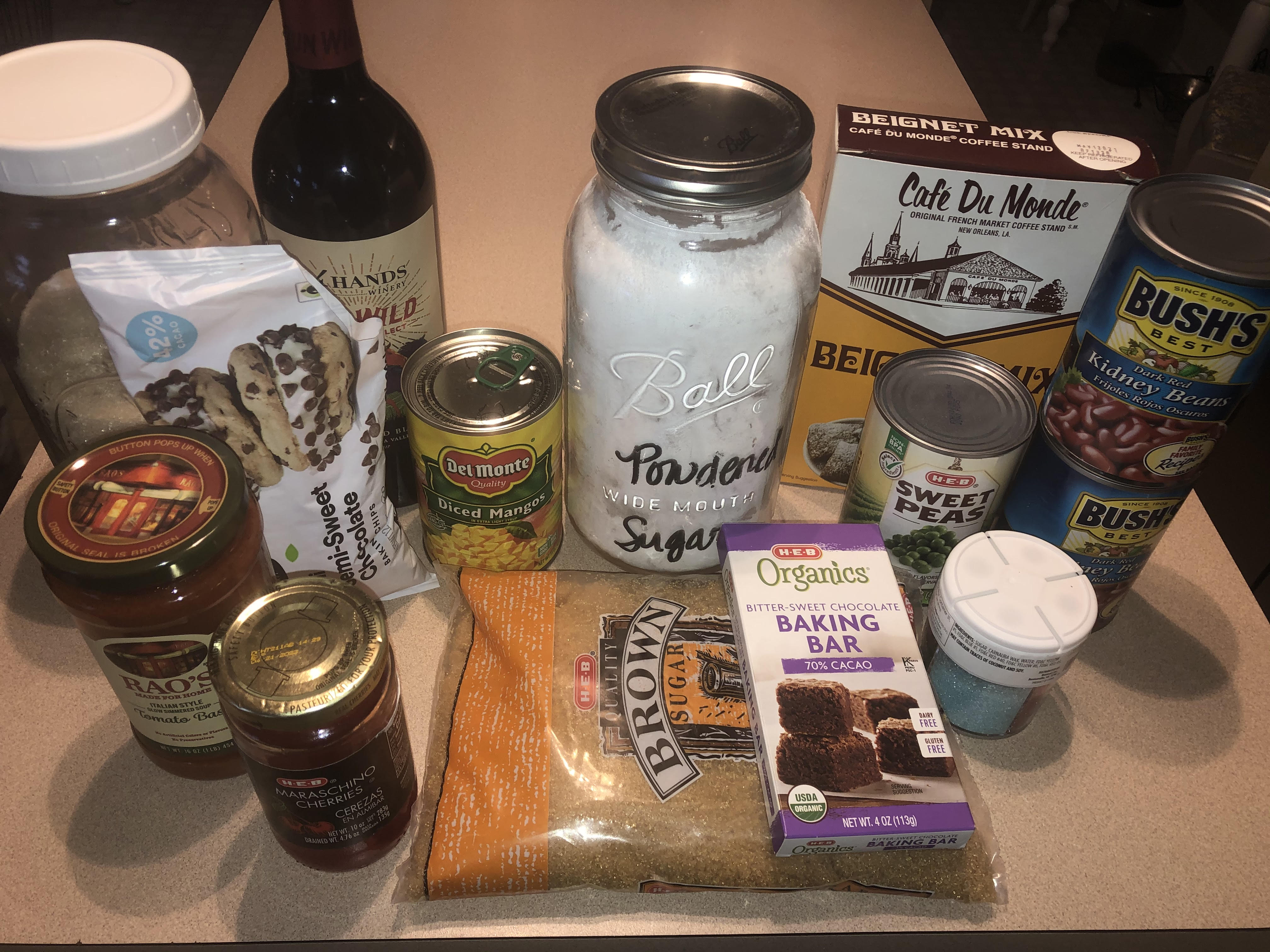
On January 31st, I threw out everything that was left. My plan was to donate the shelf-stable stuff but there wasn’t much, just one can of kidney beans and about two cups of organic cane sugar in a mason jar. My youngest son gave a low cry – for dramatic effect – as I poured the sugar into the trash.
Didn’t think a can of kidney beans would include sugar? NEITHER DID I. In fact, there were quite a few things that I found myself surprised to put into the box initially. Tomato sauce, canned mangos, peas, worcestershire sauce. Even the chai latte k-cups my kids loved. Who knew making TEA would be a sugar-filled experience? (Probably a lot of people. But not me.)
Keep in mind it’s important to read the ingredients. A package could say “no sugar added” and then you read the ingredients and maltodextrin is included. Which is sugar.
For a reference, here’s a list of “other” names for sugar in your packaged food:
- corn syrup
- corn syrup solids
- dehydrated cane juice
- dextrin
- dextrose
- maltodextrin; malt syrup; maltose
- rice syrup
- saccharose
- sorghum or sorghum syrup
- sucrose
Wins
I feel like this transition was relatively easy because 1) we didn’t really eat that much added sugar to begin with. At least I didn’t think we did. And 2) we’re quarantining due to the COVID-19 pandemic. So everyone is contained in one space, with one food funnel coming into the house. All we had to do was make sure the food we brought into the house was sugar free.
The family adjusted well. I started my period on Day One, but I had prepared for that and bought a chocolate bar sweetened with stevia to tide me over. And it was FANTASTIC. If you haven’t tried Lily’s Salted Caramel, my uterus and I highly recommended it.
Also on that first day (my worst, cycle-wise), my husband made me an Acai bowl using the Sunfood mix we get from Thrive Market, which really hit the spot. He added almonds and coconut flakes to the top. And man, that was good.
Adjustments
The kids made chai lattes with actual tea bags and milk and maple syrup. I asked how it compared to the sugar-filled k-cups to which they had grown accustomed and my oldest son said, “Meh. It’s a lot less sweet and flavorful, but it’ll do.”
We made a box of Simple Mills almond flour pancakes and chocolate muffins that first week. We bought some coconut milk-based ice cream that was sugar free from Whole Foods. I didn’t eat it but the kids said it wasn’t terrible.
For two nights in a row, on Days Two and Three, I slept REALLY well. My fitbit wasn’t charged, so I don’t have my sleep score for those nights. But I convinced myself that the lack of refined sugar in our diet was what did it. Then, on Day Four, I woke up at four am and couldn’t go back to sleep. So that nullified that scientific conclusion. In fact, according to this Goodful video, it’s typical to see sleep disruption at around this time. Also, there’s a few funny moments, like, “I don’t know, ibuprofen might have sugar in it!”
Challenges
My husband makes pizza dough every Friday for Pizza/Movie night. This is a treasured tradition in our house, and in order to make our lifestyle sustainable, we have to find a way to keep these traditions without blowing our commitment to our health.
A few weeks before February, he started experimenting with using honey in the dough instead of sugar. Which worked great. I’ll post his recipe for you soon.
However, one Friday, about a week in, he was exhausted from teaching all day and didn’t want to make the dough. Our normal solution for this would be to order pizza. He got online to look at our local pizza delivery place, and they didn’t have any sugar-free options.
So we considered our choices. We could 1) order the pizza and forgive ourselves, but possibly skew my blood pressure results for February. Or 2) I could make the dough instead.
I didn’t like the first option and he didn’t like the second (he is annoyingly picky about his dough). So he decided he would suck it up and make the dough. Had we not been working under the guidelines of this experiment, I guarantee option #1 would have won out, as it has MANY times in the past.
This is why the #1 rule in habit formation is to MAKE A GOAL.
Around Day 9, my kids started to complain. In fact, my 11-year-old cried actual tears at breakfast. He wanted his Froot Loops. Or Reece’s Puffs. Or something with sugar. We had a perfectly okay Keto cereal that he did not want. (We are not doing Keto, we just bought the Keto cereal as a sugar-free option.) We had breakfast tacos and oatmeal and toast. We had plenty of options. But the heart wants what the heart wants. And his heart wanted sugar.
I’m not going to lie. This was hard. My baby was CRYING because he wanted sugar. The logical part of my brain knew sugar wasn’t good for him. But the part triggered by his tears was wailing GIVE THAT BABY HIS FRUIT LOOPS!
We got through it. I talked to the boys about why we were doing this. About what our goals were. I might have scared them a bit when we talked about how Daddy had been diagnosed with type 2 diabetes. Their elementary school had emphasized the dangers of diabetes and apparently they did it very well, because this terrified them. I took the opportunity to remind them that this whole experiment was for our health. For all of us. To better ourselves. And that by cutting out sugar, we were helping Daddy take charge of his health as well.
It’s important to me that they know they have the power to change their fate. And that WE CAN DO HARD THINGS. Thank you, Glennon Doyle, for that valuable mantra.
THE ARCTIC BLAST
In the third week of February, a bigger crisis hit. Austin was blasted with ice and snow. I got an alert that said to be prepared for winter weather for SEVEN DAYS. Now, we get alerts like this every year. Beware of winter weather. To let Texans know it’s about to get to 30-ish. But it’s usually for two or three days and then the sun comes back out, it gets back up to 70 degrees, and we go hiking and get tacos.
But SEVEN DAYS?
My first thought was: Was that a typo?
It was not.
We got INCHES of snow. If you live up north, that’s not a big deal. My husband has a friend from Buffalo, New York who quite often has to shovel snow from HIS ROOF in the winter months. Inches is nothing to him. But in Austin, inches of snow is a VERY big deal. We don’t have the infrastructure to handle this kind of weather. We don’t have salt trucks or snow plows. Or even winter boots.
Our true inability to handle this situation became painfully evident when the state’s power grid sent out a message saying some of their power sources were compromised by the snow and ice and they weren’t producing as much as they needed to and they weren’t sure they could power the state throughout the storm.
As CNBC explained: “No power source was immune — coal, natural gas, crude, wind and solar production all dipped. Pipeline freezes impeded the flow of natural gas and crude oil. The outages were concentrated in Texas as the grid was forced to shed load, unable to keep pace with the spike in demand. At one point, more than four million people were without power.”
So, it was bad. However, our family actually got really lucky. We did go through several days of rolling power outages, meaning we didn’t know how long we would have power – and heat – and then how long it would be cut off. Or if it would ever come back on. But it was never out for more than three hours for us. And my husband ran hot water through our pipes the entire time, keeping our pipes from freezing the way others around us did. We did have some firewood, but not much. So we saved it for a “dire” emergency situation, in case the power went off completely, like it had in some places. Luckily, it never came to that for us.
Many others were not as lucky.
When I got that first emergency alert, I ordered an extra round of food, just in case. By Wednesday, I started to feel nervous that I hadn’t bought enough, because my neighbor went to a few places to get food and couldn’t find any. The shelves were empty. Some stores had to throw out perishables because of the power outages.
As it turns out, we actually did have plenty of food. But I’m prone to worry, and the idea of my kids going hungry started to weigh on me. Two more days, I told myself. Surely we could get through two more days. Saturday was supposed to be above freezing for the first time in a week, so I surmised I’d be able to get out and get food then. If we needed it.
I’m telling you all this because stress affects blood pressure levels. And mine definitely increased throughout this week. Monday the 15th I made a note that I was stressing about the ice and snow and power outages. Then, after a week of sleep interrupted by rolling blackouts and the stress of survival, my readings on Monday the 22nd were elevated. Scroll down for the data.
The Irregular Period
On the evening of the 18th, I started my period again. EIGHT DAYS EARLY. This was stressful too, because I consider a woman’s period to be a clear indication of her health. Was it the stress? Was it cutting added sugar from my diet? Was it the fact that I replaced the sugar with stevia? Read about that here.
The Results
Despite all the stressful challenges of this month, and the elevated reading toward the end, my blood pressure averages did shrink overall in February. If I eliminated that elevated reading at the end of the month, these averages would be lower. But the goal is to record the actual results of the experiment, and fluctuations happen in life. So we’re leaving that reading in.

My Systolic pressure (the amount of pressure in the arteries during the contraction of your heart muscle) came down by 7 points between January and February. My Diastolic pressure (the amount of pressure in the arteries when the heart rests between beats) came down by 5 points. And my heart rate (the number of times the heart beats per minute while at rest) came down by 6 points.
Combined with the decline seen in January, my Systolic pressure has come down a total of 15 points since December. My Diastolic pressure has come down by a total of 12 points, while my heart rate is down by a total of 11 points. These results are what I’m most proud of. And they are fueling my fire to keep going, because it seems my theory that these little changes, if stuck to, could garner real results.
I take my blood pressure every week, on Monday mornings right when I wake up, taking an average of three readings in one sitting. I also switch arms every week. The numbers above are the average of those weekly readings. Learn about why I do that here. During all three months, I was taking a multivitamin and 120 mg of CoQ10 every day. The only variable that changed was the regular yoga practice in January, and then yoga practice + sugar elimination in February.
My numbers are not yet within the range recommended by the American Heart Association. I am still within the Hypertension Stage 2 phase. But I am happy with the downward trending results. The goal is to add in actionable monthly habits that will result in a slow and steady and most importantly sustainable blood pressure decline.
I am not my only test subject. My husband is also looking to lower his numbers. He, however, is not a nerd like me. So he was not taking regular blood pressure readings in December to give himself a baseline before starting. Also, blood pressure is not his main concern. He is looking to lower his A1C. Since those numbers have to be taken through blood tests, the reports on those will be more sporadic.

Again, Wes does not have any baseline data from December. His reading from January is just ONE READING, not an average of four. So the increase between January and February could just be a lack of more data.
OR – That one blood pressure reading from January was taken at the doctor’s office, so it could also be the result of using a different machine between the one reading in January and the four readings he took at home in February.
OR – It could be that the doctor put him on medication at his doctor’s visit in January. She told him he didn’t need to get on diabetes medication yet, but that he should be taking cholesterol medication to protect his heart because his A1C levels were too high. She put him on 20 mg of Rosuvastatin Calcium. I don’t see increased blood pressure as a side effect of the medication, but you know what is?? Increased A1C. (What in the actual HELL?)
Other side effects include depression, sleep disorders and cognitive impairment like memory loss. We haven’t noticed any of those things happening yet. But I’m hoping he can get off this medication in July when he goes back in for a follow up visit. I’m also hoping his A1C levels decrease between now and then, which his doctor said was not possible.
By the end of the month, I didn’t even miss the sugar anymore. And the chocolate made with stevia that I’d bought to satiate those cravings? I didn’t even crave that anymore. Before, I’d crave a piece of chocolate around 3 pm, in that afternoon lull at work. Then I’d crave it again if I were watching TV at night. There were some moments, toward the end of the month when my psychological habit of reaching for chocolate came to me and then I realized I didn’t actually crave it physcially anymore.
So strange how I had to give up sugar completely in order to no longer crave sugar. I also am testing some recipes for some chocolate goodies I’ll be sharing soon. Stay tuned for that.
Now, on to experiment #3:
3 Replies to “Results: Sugar-Free February”
Comments are closed.