 The Queen
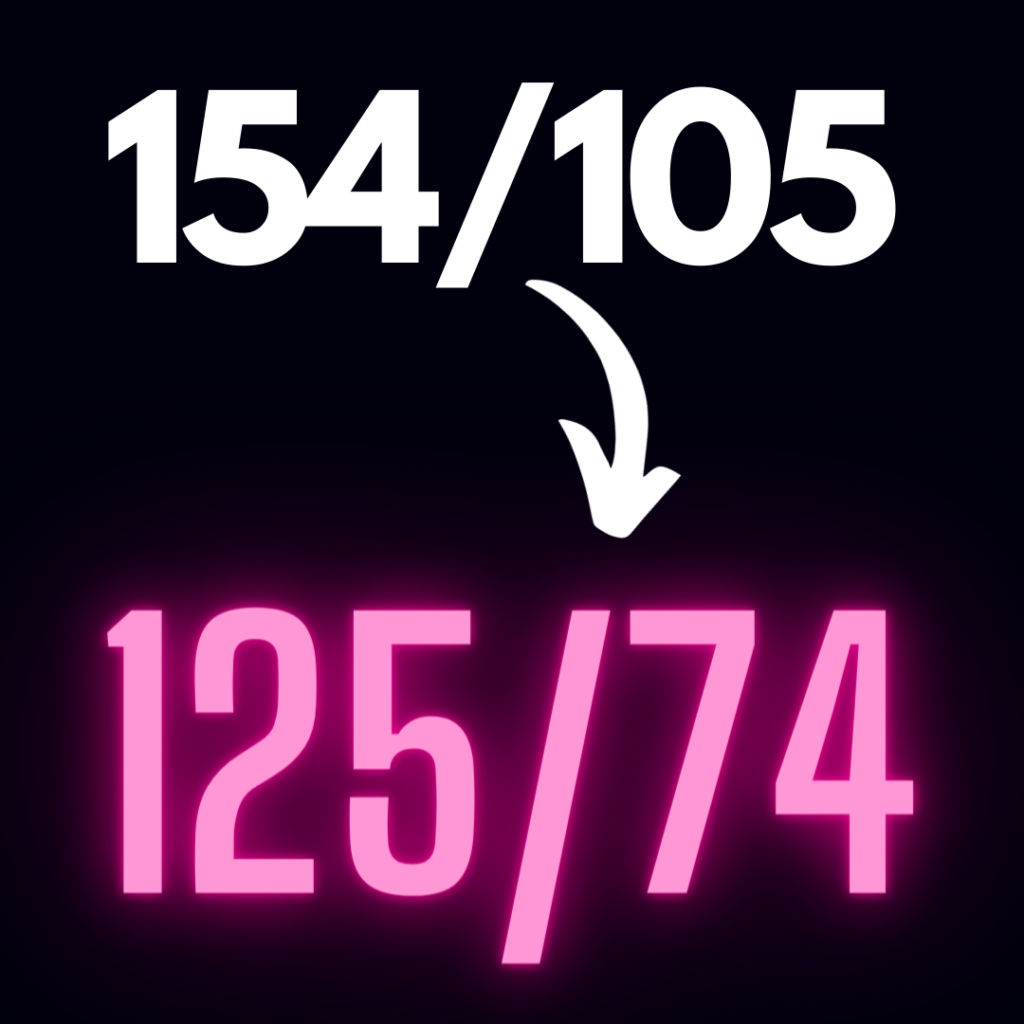
I spent a year experimenting with ways to improve my blood pressure through habit formation, lowering my blood pressure from an average of about 155/100 to an average of about 125/75, without the use of medication.
This is part 2 of a two-part post, in which I tell you exactly how I did that. Read Part 1 here. Part 1 includes a brief history, outlines my methodology, and introduces the science of habit formation.
I want to say up front that I’m not a doctor or a nutritionist. So please don’t take this as advice. I’m just telling you my story. Please talk to your own doctor before making any big changes to your life, especially quitting your blood pressure medication.
Habit #7: Work out two more days per week
According to the Mayo Clinic, 30 minutes a day of moderate exercise can benefit your mood and health, and the ability to live an independent and fulfilling life.
Southern Methodist University reports that exercise is a “magic drug” for mental health disorders including anxiety and depression. Magic. Drug. People.
We’re looking for the magic pill, right? Why not use exercise as your magic pill?
Keep in mind, I’m still recovering from a sprained ankle from July. So I knew that adding two additional days per week of exercise, taking the total to five days per week, was not going to be easy. However, it was July, so I spent a lot of those sessions in the pool doing laps. Also, the DDPY yoga program we were on has a “sitting in a chair” workout plan, which I did on my yoga days. It’s one of the reasons I loved the program so much, because anyone could do it. He has a “laying in the bed” workout plan too. So, it’s completely accessible.
My progress in July was very modest. Except for my heart rate, which dropped notably, second only to the drop seen when I cut out sugar. But I did it. I got myself going in the right direction again, and I was happy with that.
Habit #8: Magnesium three times per week
August was hard. Not because of the experiment, but because my eleven-year-old got COVID-19. He was ineligible for the vaccine at the time, and we canceled a family vacation in August to FLorida, because at that time, the hospitals in Florida were overrun with COVID patients. But we live in Texas, which was quickly behind Florida for that measure. And my son got it anyway.
So for that ten days, I was in full-on fight mode. I was consulting with medical professionals, I was organizing supplements and healthy meals. He was quarantined in my office and I was the designated envoy so I would bring him food and vitamins (so many vitamins!) and take his temperature and his oxygen levels. I didn’t workout at all during this time, I barely ate or breathed at all for a few days until he seemed to be past the worst symptoms.
So, August was the perfect month to start supplementing with Magnesium.
Every cell in your body needs Magnesium to function. It helps convert food into energy and repair RNA and DNA, and helps regulate brain function and mood.
Magnesium plays a vital role in numerous diverse cellular processes, including cardiovascular pathways, according to a study from the Journal of the American Heart Association.
While – for the function of this blog – Magnesium can help lower blood pressure, it also can help ease ADHD symptoms (which my kids deal with daily) and prevent Type 2 Diabetes (which my husband is up against), and has anti-inflammatory benefits that we ALL need right now, as the COVID-19 virus hurts our bodies through inflammation.
Magnesium is important for not just heart function, but also, if you are taking vitamin D supplements, you should know that a lack of magnesium contributes to your body not being able to USE that vitamin D.
I should note that a lot of food sources contain magnesium, such as spinach, pumpkin seeds, dark chocolate, cashews, avocados, salmon and almonds. So you might actually be getting enough through your diet.
But I decided this would be a great experiment. And it resulted in a significant decline in my blood pressure, at a time when emotionally, I was heightened to levels I’d never experienced before.
Habit #9: Make time for fun!
After all the difficulties of June, July and August, I felt like we needed something fun in September.
And if you’re thinking, it kind of sounds like you’re taking another break, well, you’re right. I think sometimes we think we need to grind it every day, we need to work hard, we need to set goals, we need to make things happen. No exceptions. And I’m guilty of that mentality. As I said, it’s hard for me to relax.
But. This is exactly why we’re having trouble with our blood pressure.
Here’s what we know: laughter lowers blood pressure, according to multiple studies, but here’s one from the European Society of Cardiology.
Now, sometimes FUN for the purpose of this experiment, was as simple as taking 30 minutes to myself and lying on the sofa to read, or dancing on my own in the kitchen while making dinner. But there were a number of other things we did this month that we hadn’t done in a long time because of the pandemic. I spent one beautiful morning hitting some garage sales with my mom, which is always a great time. One of my favorite things to do. I drank smoothies with my writing partner on a patio. My friend gave us a tour of her gorgeous new market she opened during the pandemic and I hadn’t had the chance to see yet. And my husband and I went to an outdoor concert with some great friends.

It was so fun and so necessary at that moment. And focusing on incorporating that fun into my life resulted in a slight drop in my systolic blood pressure. My diastolic blood pressure did go up slightly this month. So I don’t know what that means. But in total, my diastolic pressure was down by 16 mm Hg since the start of the experiment, so I was feeling good about my overall results.
Habit #10: Probiotics three times per week
October was the month that my diastolic blood pressure fell the most during the year. I don’t know if that is because probiotics I started taking three times per week did that. Or if this was just an adjustment from the increase I saw in September. Or a combination of both.
But I will say right around this time, my husband got results back from the VA on his A1C levels, and those had come down notably since the start of this experiment. Now, the only thing he was really was doing was the yoga three days per week, and also he cut out sugar in February, because I just rid the house of it completely, so that was gratifying as well.
Probiotics tend to be a controversial topic. I think a lot of people think this is a new scientific breakthrough. But it’s not. I won’t go into the whole history here, but probiotics are microorganisms first discovered in the early 1900’s by a Russian Nobel Laureate who started looking into the Bulgarian peasant population, which lived longer than most people. What he discovered is that these people drank a fermented yogurt drink on a daily basis.
At the time, this was a big deal. Other life-lengthening remedies that were used at the time – like swallowing gold – were expensive. Yogurt was affordable. And accessible. And it became a very popular fountain-of-youth for the masses, not just for the rich.
But then, the scientist died at the age of 71, and everyone dismissed his discovery. Perhaps it wasn’t a fountain of youth after all, they thought.
Then, in the 1960s, a Spanish yogurt company started marketing their product to Americans. We call this company Dannon in the U.S. While this product had been known to help with intestinal issues, Americans didn’t get word of it until the 60s.
But for a long time, this was thought of as a fad to some Americans. In the past decade or so, however, there’s been more scientific research related to the health effects of probiotics.
In 2014, the American Heart Association reviewed nine different studies and determined that probiotics could lower your blood pressure.
And it worked for me. I hit the lowest reading so far in the month of October!
Habit #11: Flaxseed three times per week
Flaxseed is another Omega-3 fatty acid. But there’s several types of Omega-3s, ALA, EPA and DHA. ALA is found mainly in plant oils such as flaxseed, soybean, and canola oils. And this is the one your body cannot produce on its own, so you have to get it from the foods and beverages you consume.
What I found interesting is that Flaxseed had a great impact on my diastolic blood pressure, but my systolic pressure and my heart rate remained the same. Didn’t change at all this month.
But, because that diastolic pressure fell, I hit another milestone. I fell into the Elevated range. So according to the American Heart Association, I was no longer in Hypertension. I now was living with Elevated blood pressure.
Habit #12: Potassium three times per week
Potassium enjoys an inverse relationship with sodium in your body. When sodium levels increase, potassium levels decrease, and when sodium levels decline, potassium levels increase.
This relationship is important because both sodium and potassium are electrolytes that maintain the balance of fluid and blood volume. In general, Americans eat too much sodium, which is why we are generally deficient in potassium.
When you understand this relationship, it’s easy to see why studies have shown that low levels of potassium in the diet may be just as harmful to your blood pressure as high levels of sodium.
One interesting study from Johns Hopkins discovered a link between diuretics – a commonly prescribed blood pressure reducing medication (and the one I was taking before I started this experiment) – to the loss of potassium in the body.
However, it’s important to talk to your doctor before taking too much potassium as a supplement, as it can be harmful in patients with kidney disease or for those who take certain medications.
If you want to just add potassium to your diet, some potassium-rich foods include fruits such as bananas, citrus fruits and vegetables.
This month, my pressure levels did not decline significantly. They inched down a little bit, but not much.
At the end of the year, I was still in the elevated stage. But I had successfully lowered my systolic blood pressure by 29 mm Hg, I had lowered my diastolic by 31 mm Hg, and my heart rate came down by 8 beats per minute.
Habits I Didn’t Cover
You’ll notice I didn’t include habits like “quit smoking or chewing tobacco” and “consume alcohol in moderation” on this list. In our own health journey, these habits were unnecessary because we practice them already. However, if you need them on your list, may I suggest that these are also not actionable goals. Just like losing weight, controlling addiction is a seriously difficult process. My husband quit tobacco a few years ago and I’d be happy to share his story if you are interested. And I have friends who have quit smoking with hypnosis and drinking with AA. Whatever your goal, be sure to break down some practical habits you can incorporate into your daily life. Here’s a few resources to help get you started:
- 10 Scientific Quit-Smoking Tips
- Substance Abuse and Mental Health Services Administration
- Smokefree.gov
- 10 Ways to Resist Tobacco Cravings
- Alcoholics Anonymous
So, that’s it. That was my journey to lower blood pressure in 2021. It wasn’t easy. It was hard work but it was worth it because now I have the tools I can continue to work at.